I love the way Earth rotates. It really makes my day.
Origins
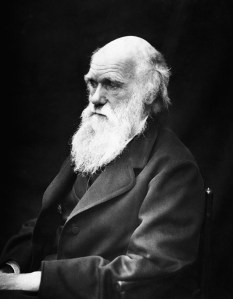
Let’s get some perspective.
You are reading this whilst spinning at approximately 1,600 km per hour on a ball of rock which is itself orbiting a large ball of gas at approximately 107,000 km per hour, in a Solar System which is orbiting the centre of our Galaxy, which is orbiting the centre of the known Universe. I know that sounds a bit abstract and difficult to comprehend and that’s because it is when your main pressing concern may be how to get through the next week at work without calling your idiot boss a moron (they are by the way, it’s a cosmological certainty like Ant and Dec winning the national television awards). But here is the first thing to accept as the price for being Human: Life is absurd. Some might call it beautiful or unique or precious but for most folk trying to get through the week I’m happy to settle for absurd.
Let me explain why.
Just under 14 billion years ago the known Universe came into existence. This section isn’t about how, because although it’s a fascinating subject we just don’t have the time, at some point the kids will want feeding and the latest episode of whatever is on tonight. Around 4.5 billion years ago the Earth was formed. Some would argue it was created rather than as a result of gravity but again, we don’t have the time. Around 3.8 to 4 billion years ago (the jury is still out on an exact date) life started, mostly likely within the warm deep-sea vents of an active underwater volcano but hey guess what? We don’t have the time to argue about it. Just accept it started.
For millions of years the life was happy to remain as simple single cell organisms, slowly mooching around the oceans before one or two either accidently or deliberately joined forces and if you forgive the Spice Girls reference – two became one. Life became multi-cellular and eventually took a leap of faith onto the land. I’m going to skip a few million years because we still don’t have the time but essentially every living thing on Earth has a common universal ancestor. That is, if you look at the DNA you will find common strands of information which indicates we all came from the same start point. Argue the toss amongst yourselves as to where or how that start point came about – to an extent it doesn’t matter. There is only one race of human being irrespective of what part of the planet you were born on. Which is why to this day I find it bizarre that we can’t all just get along.
Now comes the bit that will, I hope, help you to get through the next week. It needs thinking about but give it a go and see how far you can get before your brain hurts. You will have had 2 parents – it’s a biological imperative. You may have come about via the intervention of modern science but the biological facts remain the same so deal with it. Each of your parents will have had 2 biological parents. So far so easy to comprehend. Go back another step. On your family tree you now have 14 people above you and that’s only a few generations. Keep going. Split each parent into another set of parents. Keep going. Not too long before it gets a bit tedious right? Now think about that tree going back to the start of modern Homo Sapiens let’s say for arguments sake 200,000 years. It’s quite a family tree and a bit difficult to get your head around. Sorry, it gets worse. Now factor in the evolution of Homo Sapiens from that universal common ancestor we met a few paragraphs ago. Anything could have altered that timeline to run in a different way. The huge asteroid which struck the Yucatan Peninsula 66 million years ago? If that hadn’t wiped out the dinosaurs it’s likely that the mammals – from which you and I evolved from, I’m a man of science so that’s my view – would never have been given the opportunity to gain a foothold. It’s quite possible the dinosaurs would still be around today rather than the few reptiles (politicians aside) which we still have.
Yeah that’s all very interesting but how does that have any bearing on me getting through the next week? You already have the answer to that if you stop and think about how you got here.
Eric Idle was right: For life is quite absurd and death’s the final word so enjoy it, it’s your last chance anyhow.
You Don’t Need Stuff
Having stuff is nice. Having new stuff is even nicer. Before we get into it perhaps we need a few clarifications. Einstein had a theory about relative time. I’ve got a theory about relative stuff. It’s nothing new, it’s just been forgotten in our modern buy now, pay later society. I’m a realist. My mother used to say you don’t miss what you never had but I don’t agree. There are too many people in the World without sufficient food, shelter or access to basic medicine. Try telling them they don’t miss access to basic life-saving vaccinations. My mothers heart was in the right place it’s just that the wording was slightly off. I like to think she meant you don’t miss what you don’t need but that opens another debate entirely.
As a biological entity we need a basic level of stuff to live. Once those are taken care of is when we start to enter into the realm of want rather than need. I’m going to be concentrating on first world problems here as I think we can all accept that once the basics are cared for – food, accommodation, education, some form of healthcare – what we are really talking about is making your life as comfortable as you can. Don’t get me wrong it’s a reasonable aim. Just like the army Captain who once told me that “any damn fool can be uncomfortable” I don’t know many people short of Marathon runners who deliberately set out to cause themselves discomfort for the fun of it. It’s why I’ve never really understood camping in a tent when there are hotels.
When I buy things I want the best item at the lowest price. What I often end up with is the lowest acceptable item for the highest price I’m willing to pay. If you have ever bought a car there are lots of factors which would have influenced the purchase. Some of these are good and genuine reasons: space for a large dog, a 4-wheel drive system for a farmer, comfort, economy – the list could go on. We then get to price. A car costing a six-figure sum does the same job as one costing five or four figures. Accepted the more expensive is likely to be more comfortable which goes back to the point above but it also goes back to the main point too – you don’t need it. You want it. Wanting something rather than needing it is a miserable road to happiness. Why? Because you never reach your destination.
I had a colleague who was excited about getting a new car. It was a Porsche. It looked a beautiful piece of engineering. He had worked and saved hard. He felt he deserved it. No criticism from me. Work and spend your money as you wish. Some time after he had owned the car I asked what was the best bit of finally getting his dream. His reply left me confused at the time but makes more sense to me now: “The day before I got it.” He had paid lots of money and was on the same miserable road and was no closer to his hoped for destination. And he later got banned for speeding.
Believe what you want – I really don’t care
I often find myself drawn towards social media. I particularly enjoy the people who comment on things they don’t actually know:
Questioner: Anyone know if this cable fits a Galaxy?
Answer: Not sure as I bought a different one.
I mean, what is wrong with these people?
I’m also drawn towards the people who comment on platforms such as Twitter as if they have an absolute truth that has somehow escaped the rest of us. I read them for my own amusement which I know is wrong but I’m only human and our village idiot retired ages ago.
The reason I don’t care what you believe? Because people believe what they want. It’s confirmation bias and it’s part of human nature. People will say the Moon landings were fake and point at a doctored image on the internet as evidence. They will dismiss the fact that several independent countries have taken photographs of the various landing sites and you can point a laser at a mirror left there by one of the Apollo missions.
The point here is that life is short and time is precious. I don’t care if “they” think they know something which the rest of us don’t.
Long ago I decided that I don’t argue with stupid people, I just say “I don’t agree with you personally, but others might” and then get on with my day. Give it a go. It’s quite liberating.
The greater our knowledge increases, the greater our ignorance unfolds
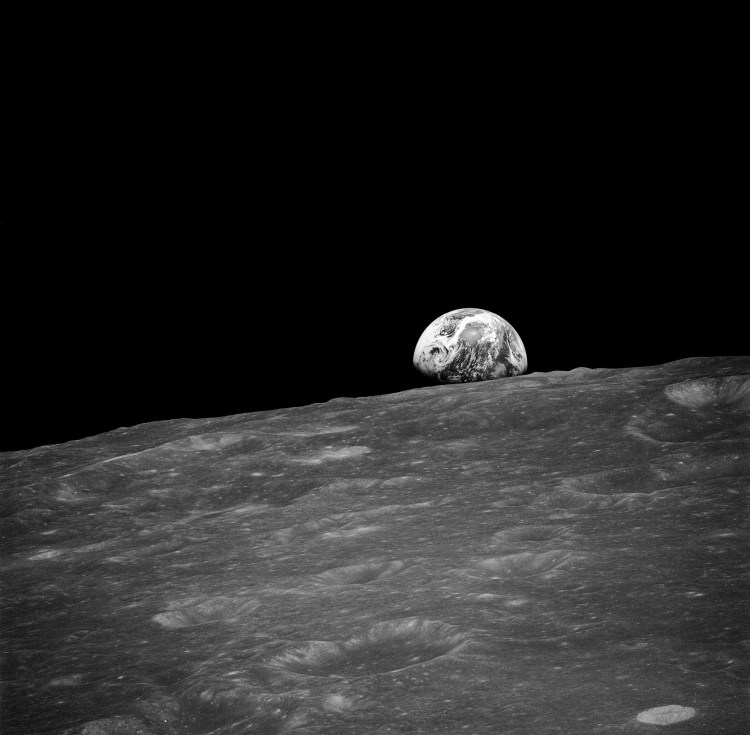
On the home page you may have noticed a youtube link to the speech given by President Kennedy at Rice University September 1962. It’s one of my favourite clips to watch. Do your brain an intellectual favour and allow yourself 15 minutes or so to absorb it. If you are really keen find the text of the speech online and read it. Consider what the words meant for mankind’s future. President Kennedy famously said, “We choose to go to the Moon in this decade and do the other things, not because they are easy but because they are hard. Because that goal will serve to organise and measure the best of our energies and skills, because that challenge is one that we are willing to accept, one we are unwilling to postpone, and one which we intend to win”.
Compare the vision, hope and boldness of that speech to almost anything a modern-day politician trots out and I suspect you will be shocked. It was Joseph de Maistre who said that every country gets the government it deserves but in my view we all deserve better.
President Kennedy talks about courage, the courage to achieve something wonderful – building a rocket to take a human to the Moon and back. Remember, this is only 59 years after the Wright brothers first took to the air. He acknowledged the fact that something so difficult as spaceflight was an “act of faith and vision” but would improve mankind in so many different ways that it was a risk worth taking. Not easy, but hard.
The world remains in desperate need of such inspirational leaders who can see the bigger picture of where humans fit into the cosmos. “The conquest of space deserves the best of all mankind”. We need leaders who stop employing a large percentage of the worlds scientists to come up with new and innovative ways of killing each other. We need leaders who can stop arguing over the finite resources on Earth when there are infinite resources within reach in space. We need leaders with integrity and vision. Just like at the beginning of Kennedy’s speech, in an age of ignorance we stand in need of all three.
If you want to know the future, look at the past
The above is a quote from Einstein. It seems counter intuitive until you think about it. I have always been interested in history. I like to go back in time and learn how Earth was formed, how life on Earth started. I’m fascinated by the Kings and Queens that shaped England. The Victorians that shaped the industrial revolution. I have an interest in modern history too and the Second World War in particular. I suppose it is the most personal as my Grandfather’s medals speak to me of what he went through and the wars legacy is often still written on the cities of Great Britain and Europe when I visit.
On a trip to the United States I recall meeting an elderly gentleman and somehow we got onto the subject of the Second World War. After some time he said he had been an American serviceman at D-Day. It wasn’t said with bravado or as a boast, in fact he almost seemed to apologise for telling me. I thanked him for what he and the United States had done to help save Britain from the Nazis. He looked taken aback at this. After all these years here was a younger person who was willing to remember? I had good reason to thank him. I knew about the lend/lease program in the early part of the war that enabled Britain to arm its troops and put oil in tanks; I knew about the Atlantic Convoys that stopped Britain from starving; I knew about the American Bomber squadrons who conducted daytime raids at huge cost to aircraft and crew; I knew about Operation Overlord and the American blood spilt on the beaches of Normandy. It was called a “World War” and I also don’t forget the Canadian; Australian; New Zealand; European and other Commonwealth Countries alongside the Soviet Union who all helped defeat the Axis Powers. But it is my view that it was the United States, that decided to stand alongside Britain early on in the war when it really didn’t need to (Europe must have seemed a long way away and this was before the attack at Pearl Harbor) that enabled Britain to say no to the Nazis rather than sue for peace as many at the time wanted. That decision I am sure has shaped my life to this day.
So why is this still relevant? Why does this matter anymore? I believe that history is a great teacher. It’s not an opinion; it’s not conjecture; it’s not a best guess. It’s already happened. We build the future on what we have learnt from the past. For sure there are dark periods in our human history: Wars; slavery; genocide. But if we erase these from our collective knowledge we run the risk of history repeating itself. The people of Norway still send a Christmas tree to stand in Trafalgar Square in London every year as a thanks to the people of Britain who helped defend it during the war. I’m sure to many who walk past, the history of the gift goes unnoticed. But just like my parting handshake to the elderly gentleman I mentioned earlier, there are some things in the past which we have a duty to remember in order to help pave the road for a better, brighter future for us all.
Making other plans
It was John Lennon who said that life is what happens while you are busy making other plans. It comes from a song he wrote for his son. When I was younger I never really understood what he meant but as you age and suffer the slings and arrows of outrageous fortune it dawns on you one day that you aren’t really in control of anything. Shakespeare had it right in the paraphrase from Hamlet above. Baz Luhrmann described it as being blindsided by your real troubles at 4 pm on some idle Tuesday. I like to believe I am in control of my life but in reality that control is limited. I can decide when to eat a meal or read a book but whether I am killed in a car accident by a speeding driver is outside of my control. So here is a piece of advice which I read a number of years ago when I was suffering from a period of depression which helped. It’s not rocket science and it’s wisdom which can trace various roots back to many a stoic philosopher.
Here it is: There are two things you can change – your own thoughts and your own actions. Everything else is external.
This is a concept from history but I think the simple message has been lost in the modern world. The roman emperor and stoic philosopher Marcus Aurelius famously wrote: Choose not to be harmed and you won’t feel harmed. Don’t feel harmed and you haven’t been.
The language maybe be archaic but the message to absorb is modern. Since you are only in control of yourself you can choose whether something causes you “harm” or not. In a modern sense I would substitute the words stress or anxiety for harm. When this outlook on life was pointed out to me I was surprised at how obvious it was, after all it wasn’t the event or issue which was causing the stress, only my perception of it. I could “choose” not to feel harm (stress) if I wanted to. It’s not about stopping caring, it’s about choosing your reaction to a given situation. Sometimes that choice is taken away from you by biology (I would recommend The Chimp Paradox by Professor Steve Peters for an insight into this) but on the whole we have a choice. We don’t often find ourselves being chased by tigers anymore but thanks to biology the brain still wants to keep us safe so has switched its focus from protecting us from large carnivores to being stressed at someone who cuts you up in traffic. Once you understand this is how your brain works it makes avoiding the feeling of “harm” (stress) much easier.
I don’t claim this to be a panacea for all the worlds problems, but then again I’m not responsible for all the worlds problems. Unless you are reading this as a World Leader, then neither are you. In my head I have the below illustration always available when I get blindsided as Baz put it:

If you can do something about the problem then worrying about it is pointless – it will get resolved. If you can’t do anything about the problem because it’s outside of your hands (“external”) then worry won’t solve it either.
Whether you can do something about the problem or not the results are always the same. So why worry?
Next time you hit a big problem try following the arrows and see if it helps. But regardless, trust Baz on the sunscreen.
 M.B.Fox